Yep, you heard me right. I decided to take on the challenge of making my own Ferrous Sulphate mordant by scouring my toolbox and taking a trip to my local recycle centre for pretty much anything rusty..5 minutes in the warehouse and I happened across a box full of old rusty nails – bingo! I also spotted an old rusty bike chain and took that too. While there I found an old Alba walkman and got that and the box of rusty nails for a whole £1! Bargain..
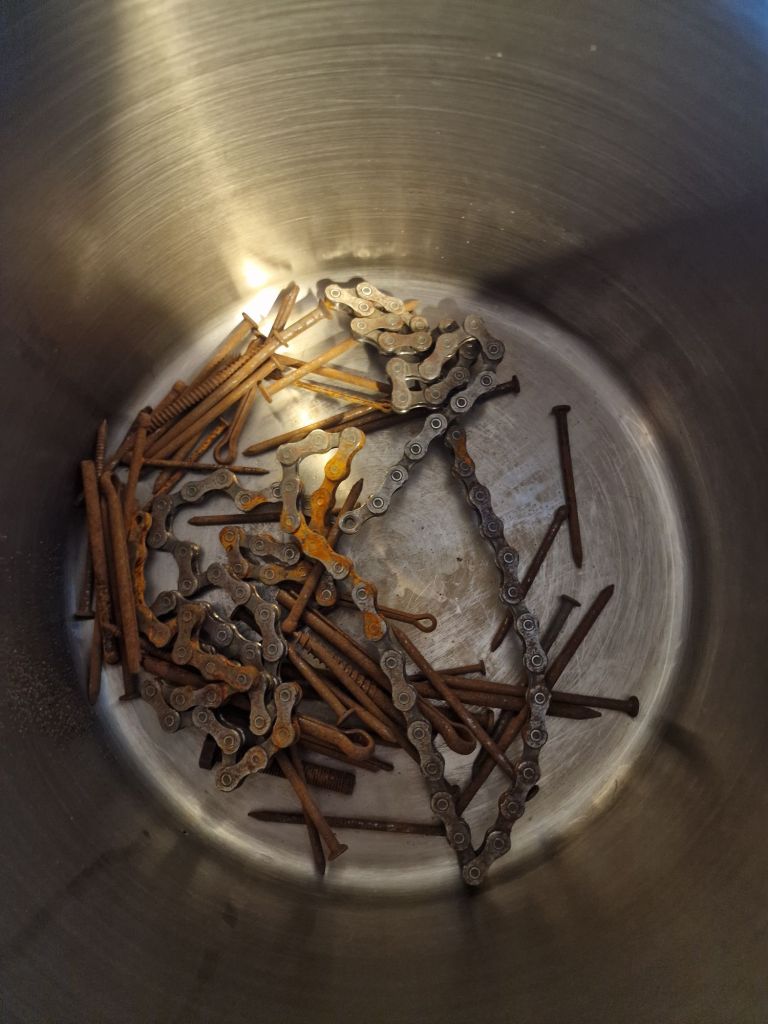
I added some water and let it simmer for about an hour. Oh my, the smell! I had to stop at an hour because my flat was filling with an awful iron odour and I started to worry it would seep into my soft furnishings!
I popped some of the fabric cyanotypes into the pot after plucking out the nails and chain, and left it overnight.
In the morning, I rinsed the fabric and hung it to dry. The plain fabric round the edges had slightly browned but the images themselves were still very much blue, albeit slightly faded, but I know iron mordant tends to have that effect.
I decided to pop it back into the soil toner and looked forward to the results..

Overall, slightly disappointed. The image hadn’t seemed to take to it. Was this because the toner was cold? Because I’d already put these poor pieces through the mill?
Undeterred, I decided to use some of my other cyanotypes and start afresh with the toning, but this time I purchased some Alum (hydrated potassium aluminium sulfate). Alum is one of the most popular mordants used in natural dyeing, as you can dye and mordant all at the same time. I didn’t fancy going through the iron nails process again, so decided to give the alum a try with the existing soil toner.
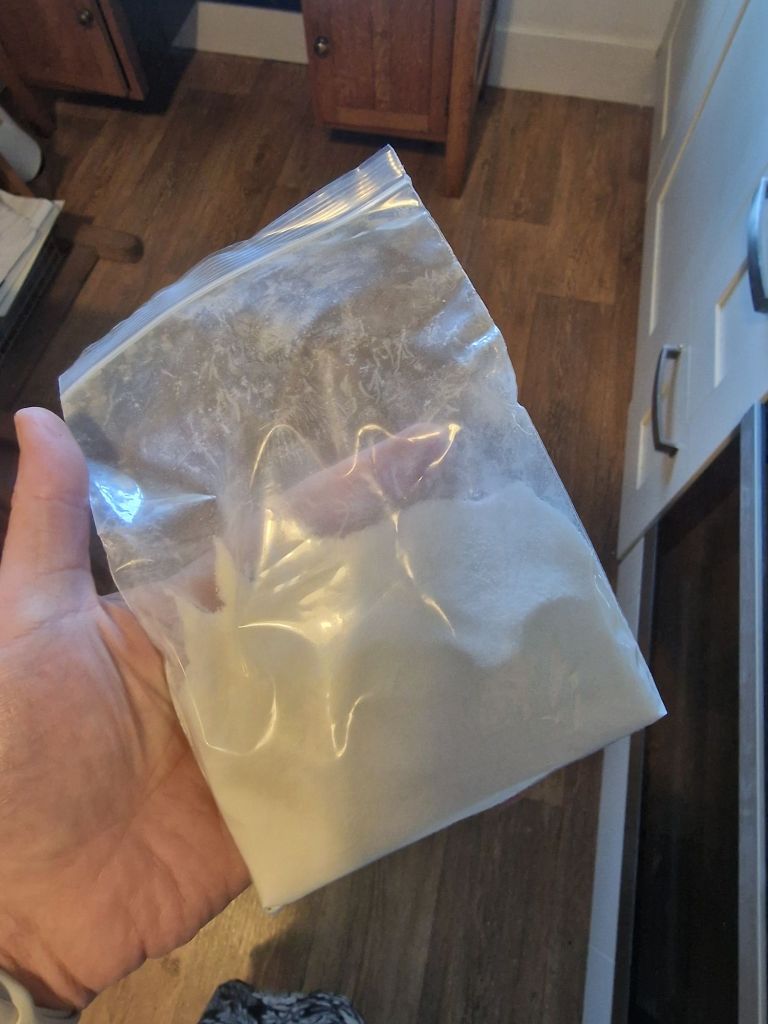
I don’t think I have used any of my chemistry knowledge from school as much as I have recently! I feel like you need a degree in science to undertake this project successfully. The main issue is ratios I find. Getting the right chemical ratio to water has a huge effect on the overall outcome and is frankly giving me a headache!


 Sara Dobson Art
Leave a comment